Seeds
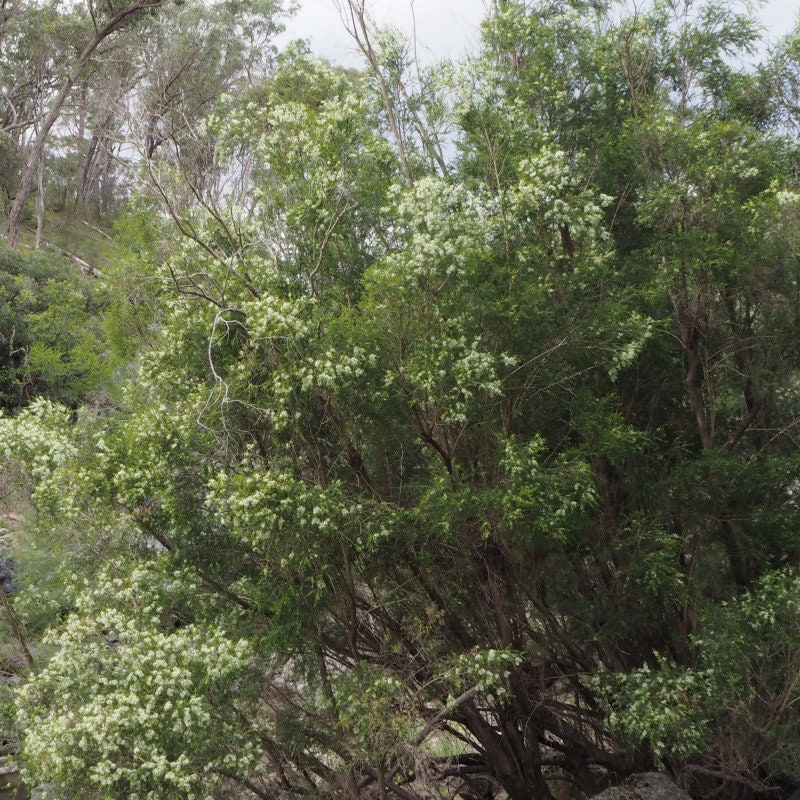
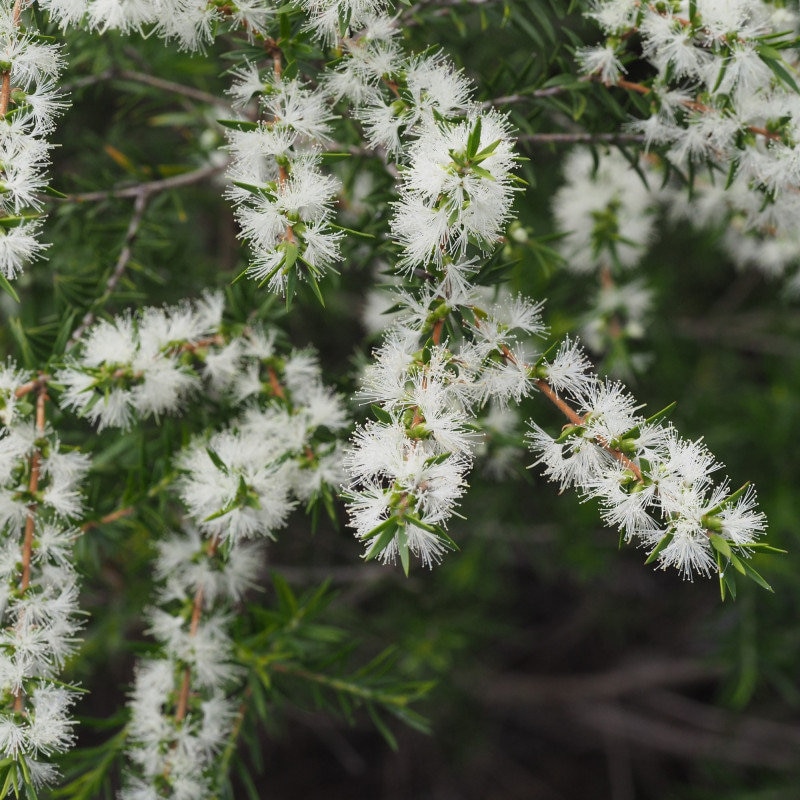
Melaleuca Bracteata seeds, Black tea tree
$4.06+ $6.77+
-
DetailsThe **Melaleuca**, also known as the "tea tree," is a genus of plants in the Myrtaceae family, which includes popular species like **Melaleuca alternifolia** (the Australian tea tree). This genus is prized for its spiky flowers and aromatic foliage. Sowing **Melaleuca** seeds can be a little tricky due to their small size and the need for specific conditions, but with the right method, you can successfully grow them.
Here is a guide to successfully sowing Melaleuca seeds.
---
### **Materials needed:**
- **Melaleuca** seeds.
- Light and well-draining substrate (seedling soil, perlite, sand).
- Pots or seed trays.
- Spray bottle or watering can with a fine nozzle.
- Mini greenhouse or plastic film (optional).
- Indirect light or horticultural lamp.
---
### **Steps for sowing Melaleuca seeds:**
#### 1. **Seed preparation:**
- Melaleuca seeds are small and can have a tough skin. Scarification is not usually necessary, but soaking the seeds in warm water for about 12 to 24 hours can help improve germination by softening the seed skin.
#### 2. **Choosing the right time to sow:**
- The best time to sow **Melaleuca** seeds is **in spring** or **in summer**, when temperatures are stable and moderate.
- Seeds germinate best at a temperature between **18 and 24 °C**.
---
#### 3. **Substrate preparation:**
- Use a light and well-draining mix, such as a mixture of **seed potting soil**, **perlite** and **sand** (or vermiculite) to ensure good drainage.
- Fill pots or seed trays with this substrate and lightly tamp down to even out the surface, without compacting too much.
---
#### 4. **Sowing the seeds:**
- **Sow the seeds on the surface** of the substrate. **Melaleuca** seeds are very small, and it is important not to bury them, as they need light to germinate.
- **Do not cover them**, but gently press the seeds to ensure good contact with the substrate.
- You can also lightly spray water to maintain constant humidity.
---
#### 5. **Germination conditions:**
- **Humidity:** Maintain constant humidity, but avoid saturating the substrate. Lightly mist if necessary.
- **Temperature:** Place the pots in a warm location, ideally at **18-24 °C**. A stable and moderate temperature is crucial for germination.
- **Light:** Melaleuca seeds need light to germinate, so place them in a bright location, but avoid direct sunlight, which could dry out the substrate.
- A **mini-greenhouse** or **plastic film** can help maintain constant temperature and humidity, but be sure to ventilate regularly to prevent mold.
---
#### 6. **Germination time:**
- Germination of **Melaleuca** seeds can take between **3 and 6 weeks**, depending on heat and humidity conditions. Be patient and continue to maintain stable temperature and humidity.
---
### **Seedling Care:**
#### 1. **After germination:**
- Once the seedlings appear, continue to maintain consistent humidity. They will need indirect light to develop properly. A grow light can be used to provide sufficient light, especially if you are sowing indoors.
- **Ventilation:** If you have used a mini-greenhouse or plastic film, remove them gradually to allow the seedlings to adapt to the ambient air and avoid excess humidity.
#### 2. **Watering:**
- Water the young seedlings moderately, keeping the substrate slightly moist. Use a spray bottle to avoid disturbing the small roots and leaves.
- Avoid letting water stagnate in the pots, as this can lead to root rot.
---
#### 3. **Transplanting the seedlings:**
- When the seedlings have reached **2-3 cm in height** and you can handle them without risking damage, you can begin transplanting them into individual pots. Handle the roots carefully, as they are still fragile at this stage.
- Be careful not to bury the roots too deeply and to maintain a slight moisture around the young plants.
---
### **Transplanting in open ground:**
#### 1. **When to transplant:**
- Once the young plants are sufficiently robust and when outside temperatures are stable and warmer (in spring or summer), you can transplant them into open ground.
- Ensure that there is no longer any risk of freezing.
#### 2. **Location:**
- Melaleuca prefers a location in full sun or bright light for optimal flowering. Choose a sunny spot, especially for species like Melaleuca alternifolia.
- The soil must be well **drained**, light and slightly acidic. If necessary, improve drainage by adding sand or gravel.
#### 3. **Spacing:**
- Space the young plants **30 to 50 cm** apart to allow each plant to develop properly.
---
### **Post-planting maintenance:**
1. **Watering:**
- Melaleuca needs moderately moist soil, but once established, it is quite drought-tolerant.
- Make sure that young plants are not overwatered. It is best to let the soil dry out between waterings.
2. **Size:**
- If necessary, you can lightly prune dead or damaged branches to promote better shape and denser growth.
- You can also prune lightly after flowering to encourage new growth.
3. **Fertilization:**
- Melaleuca does not need frequent fertilization, but a moderate application of a balanced liquid fertilizer in spring can encourage good growth.
4. **Rustiness:**
Some Melaleuca species are sensitive to frost, while others are more resistant. You may need to protect your young plants in winter if you live in a cold region.
---
### **Additional tips:**
- If you live in an area with cold temperatures, it may be better to grow **Melaleuca** in a pot, which you can bring indoors during the winter.
- **Melaleuca** can be sensitive to excessive moisture and root rot, so make sure the soil is well drained and that the pots or outdoor soil do not remain too waterlogged. -
Shipping & Policies
Shipping from France
Processing time
1-2 business days
Customs and import taxes
Buyers are responsible for any customs and import taxes that may apply. I'm not responsible for delays due to customs.
Payment Options
Returns & Exchanges
Returns & exchanges accepted within 14 days
Buyers are responsible for return shipping costs. If the item is not returned in its original condition, the buyer is responsible for any loss in value.
The following items can't be returned or exchanged
Because of the nature of these items, unless they arrive damaged or defective, I can't accept returns for:
- Custom or personalized orders
- Perishable products (like food or flowers)
- Digital downloads
- Intimate items (for health/hygiene reasons)
Conditions of return
Buyers are responsible for return shipping costs. If the item is not returned in its original condition, the buyer is responsible for any loss in value.
Related Products
5 Blueberry seeds, Vaccinium myrtillus
$3.89
$6.49
10 Seeds Thymus baeticus, Betic Thyme
$4.87
$8.11
3 Blue Flamboyant Seeds, Jacaranda mimosifolia
$3.24
$5.41